
Many DeFi users assume transaction simulation and multi-chain convenience are enough to neutralize risk. That’s an attractive, but incomplete, belief. Simulation answers “what will happen if I submit this exact transaction now?” but it cannot fully answer “what will happen once my transaction enters a shared public mempool, faces front-running, or is routed across multiple chains and bridges.” Understanding where simulation helps, where it doesn’t, and what additional protections a modern wallet can — and cannot — offer is the practical skill that separates cautious users from vulnerable ones.
This article uses a concrete case — a US-based trader moving an ERC-20 position across two EVM chains while interacting with a lending protocol — to explain how MEV (miner/maximum extractable value) attacks, cross-chain complexity, and wallet-level defenses interact. It foregrounds security, custody trade-offs, and operational discipline, and it shows how a multi-chain wallet with transaction simulation fits into a defensive stack rather than serving as a complete shield.
The case: moving collateral from Ethereum to an L2 and opening a leveraged position
Imagine Alice in the US wants to move 50,000 USD-equivalent of a token from Ethereum mainnet to an L2 to take advantage of lower fees and a borrowing incentive. Her wallet offers a simulation feature that previews gas usage, slippage, and final balances after the composite steps: approve token, call bridge, wait for L2 finality, and then interact with a lending protocol. The simulation shows a clean path and a profitable margin. She clicks “confirm.”
What the simulation captured: the exact state given current on-chain data — token allowances, estimated gas, liquidity pool reserves, and a calculated slippage estimate if the pool executes at current depths. What it could not capture fully: the time between simulation and on-chain inclusion, whether searchers will insert sandwich or front-run transactions, and bridge-specific latency or finality rules that change the effective exposure window. Those gaps open several attack surfaces.
Mechanisms of MEV and where simulation helps or fails
MEV refers to value extractable by reordering, censoring, or inserting transactions within the block-building process. On proof-of-stake and miner-based chains, block builders and searchers observe the mempool (or receive transaction bundles) and can execute strategies like front-running (submit a transaction that goes before yours), back-running (execute after you), or sandwiching (buy before and sell after) to extract value from your trade.
Simulation is powerful for operator mistakes: it prevents sending malformed calls, mispriced gas, or obviously catastrophic slippage. It also documents expected state changes, which helps with auditing and mental models. But simulation typically assumes your transaction is executed in isolation at current state — not that a searcher will pay a priority fee, outbid your gas, or create dependent trades. In short, simulation reduces execution uncertainty caused by user error; it does not eliminate strategic uncertainty caused by competing actors.
Cross-chain complexity and the bridge risk layer
Cross-chain operations introduce two new classes of risk. First, asynchronous finality and long settlement windows increase the period when funds are partially exposed on both chains. Second, bridges and relayers add trust-minimized or trust assumptions that change attack vectors: smart-contract bugs, validator collusion, or unequal asset pegging can all create losses independent of MEV.
For Alice, the bridge step is the longest exposure window: while on-chain state is progressing across networks, searchers can still act on complementary markets and create adverse price moves on the destination chain that simulation didn’t predict. A wallet that simulates the composite flow can raise flags — “this composite flow will take X minutes” or “slippage risk increases due to low destination liquidity” — and that information is actionable. But no client-side simulation can erase cross-chain latency unless the user chooses alternatives (smaller size, time-of-day execution, or using relayer services with private transaction submission).
What advanced wallets can and should do: defenses, trade-offs, and limits
Best-practice defenses combine multiple mechanisms. Important components are: transaction simulation (to prevent simple user errors), private transaction relay or bundle submission (to reduce public mempool exposure), configurable priority fees and gas strategies, heuristic-based alerts for sandwichable trades, and UX that clarifies on-chain exposure time and bridge-specific finality. A modern multi-chain wallet that integrates these elements helps users make informed operational choices.
But each defense has trade-offs. Private relays and bundle submission can reduce mempool visibility, but they often rely on third-party services that introduce different trust assumptions or fees. Increasing priority fees can buy faster inclusion but raises cost and can still lose against sophisticated searchers who are willing to outbid. Heuristics for “sandwichable” transactions are useful but imperfect: they generate false positives (annoying warnings) or false negatives (missing subtle liquidity vulnerabilities).
Custody also matters: an externally owned wallet where the user controls private keys gives maximal control but requires strict operational discipline and a secure environment (hardware keys, anti-phishing measures). Custodial or smart-wallet abstractions can add automation and batching but create centralization and new attack surfaces. The pragmatic choice depends on user priorities: maximum control vs convenience with managed risk.
Where wallets like rabby wallet fit and what to expect in practice
Wallets positioning themselves as “simple, fast, secure” for EVM chains typically combine simulation, multi-chain support, and UX features designed to surface risk. For practical decision-making: use simulation to catch mistakes and to generate precise, time-stamped previews you can save before complex moves; use private submission options when available for large, time-sensitive trades; and treat bridge steps as separate operational stages with explicit checkpoints.
If you want a wallet that aids defensible operations across multiple EVM chains, look for one that does more than show balances. Useful features include transaction simulation for composite flows, explicit mempool exposure estimates, optional private RPC/relay submission, clear bridge finality descriptions, and a UI that enforces confirmations at each meaningful risk boundary. For US-based users, regulatory clarity and custodial policies may also influence whether you prefer self-custody or a service that offers recovery and compliance features.
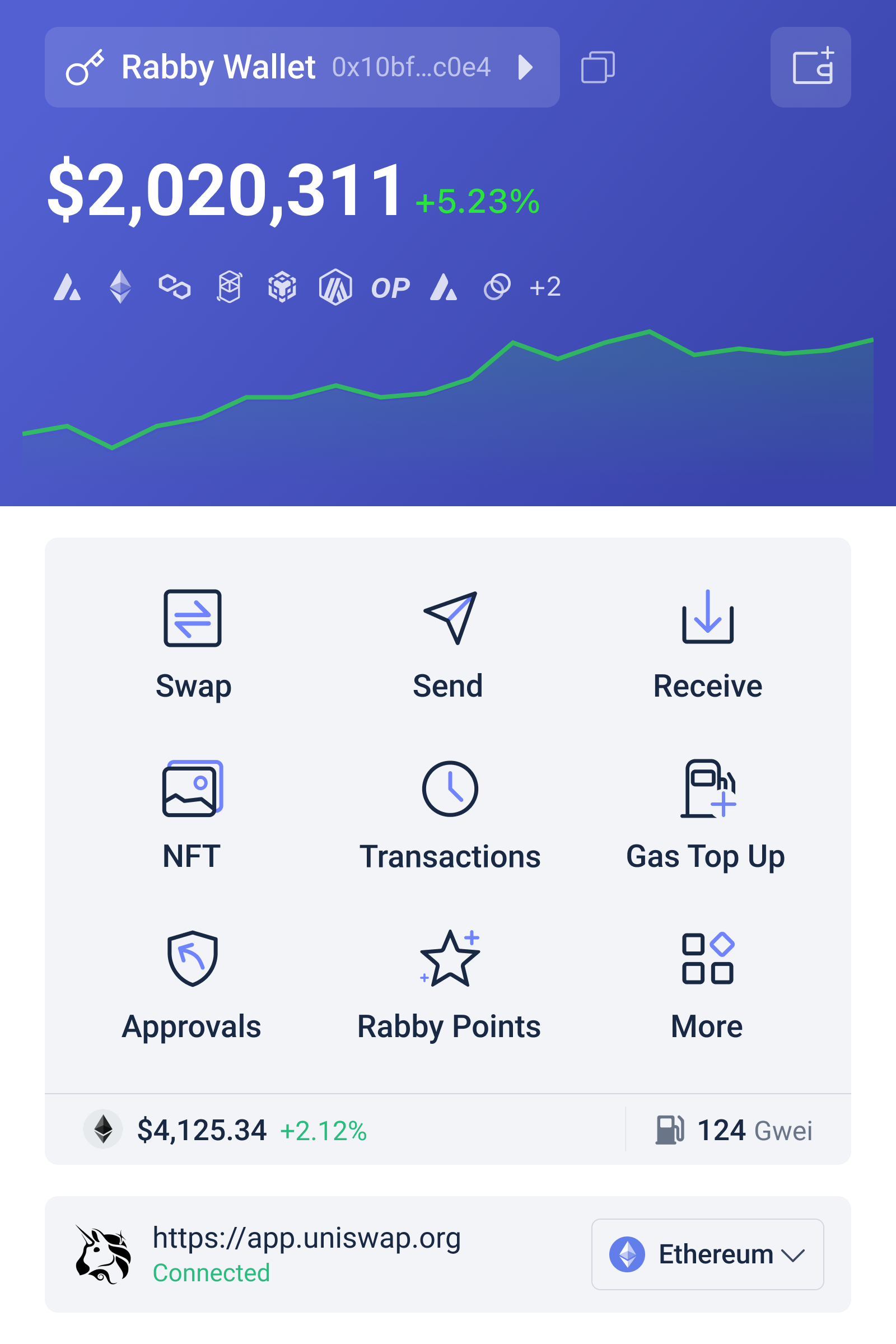
For readers evaluating practical tools, one place to check is a wallet that advertises robust multi-chain features and transaction simulation: rabby wallet. Use such tools as part of an operational playbook, not as a single-point safety net.
Decision-useful heuristics: a compact operational playbook
Here are reusable heuristics drawn from the mechanisms above:
- Size relative to depth: if your trade is greater than 1–2% of pool depth, assume it’s sandwichable and either reduce size or use private submission.
- Break complex flows into checkpoints: simulate and confirm at each cross-chain handoff instead of treating a composite flow as atomic.
- Cost vs latency trade-off: faster inclusion reduces MEV exposure but increases cost. For high-value moves, tolerating higher fees for private bundles can be pragmatic.
- Custody posture: if you need automation and multi-sig, accept some centralization; if you demand maximal sovereignty, invest in hardware wallets and strict key hygiene.
What to watch next — conditional signals, not predictions
Watch these developments as signals rather than predictions: if private bundle relays continue to grow and become cheaper, they will materially reduce public-mempool MEV for retail trades; if bridges shorten finality windows while adding validator complexity, cross-chain operational risk will shift shape rather than disappear. Regulatory moves affecting custody or transaction reporting in the US could change the calculus for self-custody vs custodial trade-offs.
Each of these signals matters because they alter incentives for searchers, relayers, and wallet providers. The practical implication for users: maintain an adaptive playbook and prefer wallets that make trade-offs explicit and offer multiple operational modes rather than a single “one-click” convenience that hides exposure.
FAQ
Can transaction simulation stop front-running and sandwich attacks?
No. Simulation identifies errors and projects state under current conditions; it cannot prevent strategic actors from observing, outbidding, or inserting transactions once your signed transaction is public. To reduce front-running risk, consider private bundle submission, smaller trade sizes, or timing strategies.
Does a multi-chain wallet remove bridge risk?
No. A wallet can surface bridge-specific parameters and simulate expected finality, but bridge risk (validator behavior, smart-contract bugs, peg stability) is orthogonal to simple UI features. Mitigation includes using well-audited bridges, smaller transfers, or waiting for canonical finality before further actions.
When should I prioritize private relays over lower gas fees?
For high-value or time-sensitive trades where expected MEV could exceed the fee differential, private relays are worth the cost. For routine small trades, public mempool submission with conservative sizing and slippage limits is often adequate.
How do I evaluate a wallet’s security posture?
Look beyond marketing: check whether the wallet supports hardware key integration, offers clear simulation outputs, provides optional private submission, documents bridge finality behavior, and explains its own trust assumptions (e.g., use of third-party relays). Also evaluate usability: clear confirmations reduce human error, which is a leading cause of losses.